
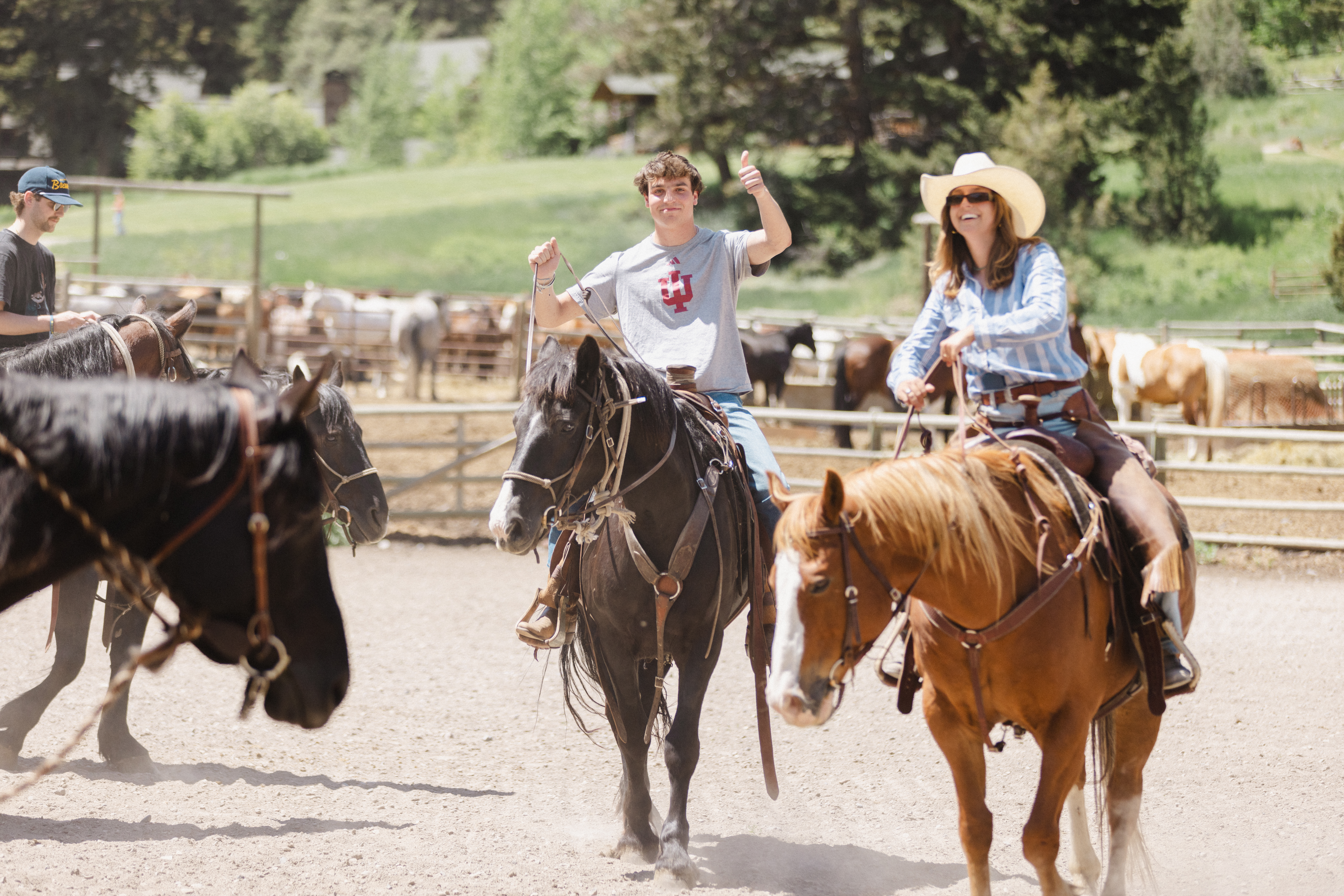
 Riding the range out west is a dream for many people. For others, it can be intimidating putting your trust in an independent, intelligent creature like a horse. The Mountain Sky dude ranch experience is based on almost 100 years of tried-and-true methods to ensure first-time horseback riders grow comfortable and confident in the saddle.
Whether it becomes a lifelong passion or a single bucket list experience, horseback riding for beginners is a carefully planned activity that is not just included, but celebrated at Mountain Sky.
Decoding the Gear: Western Tack Explained
Montana horseback riding is mainly in the Western style. The Western saddle sits deeper than the English saddle, designed for comfort and longer rides.
Other differences include longer stirrup lengths and the saddle horn. Stirrup lengths are lower and can be used to poise and balance yourself comfortably in the saddle. The horn itself is not utilized on trail rides as it’s designed for use in roping cattle.
At Mountain Sky, some of our tack is specially chosen for beginner rides. For example, we use snaffle bits, which have a break in the bit. With a snaffle bit, you use direct rein to instruct the horse on where to move. This is the easiest and quickest way to learn how to communicate with your horse. If you pull your left rein with your left hand, the horse goes left. If you pull your right rein with your right hand, the horse goes right.
To tell your horse to stop, simply pull back gently with both hands at the same time. This intuitive way of communicating is faster for beginning riders to learn, helping both the horse and the human work together.
From City Slicker to Saddle Pro: Your First Ride
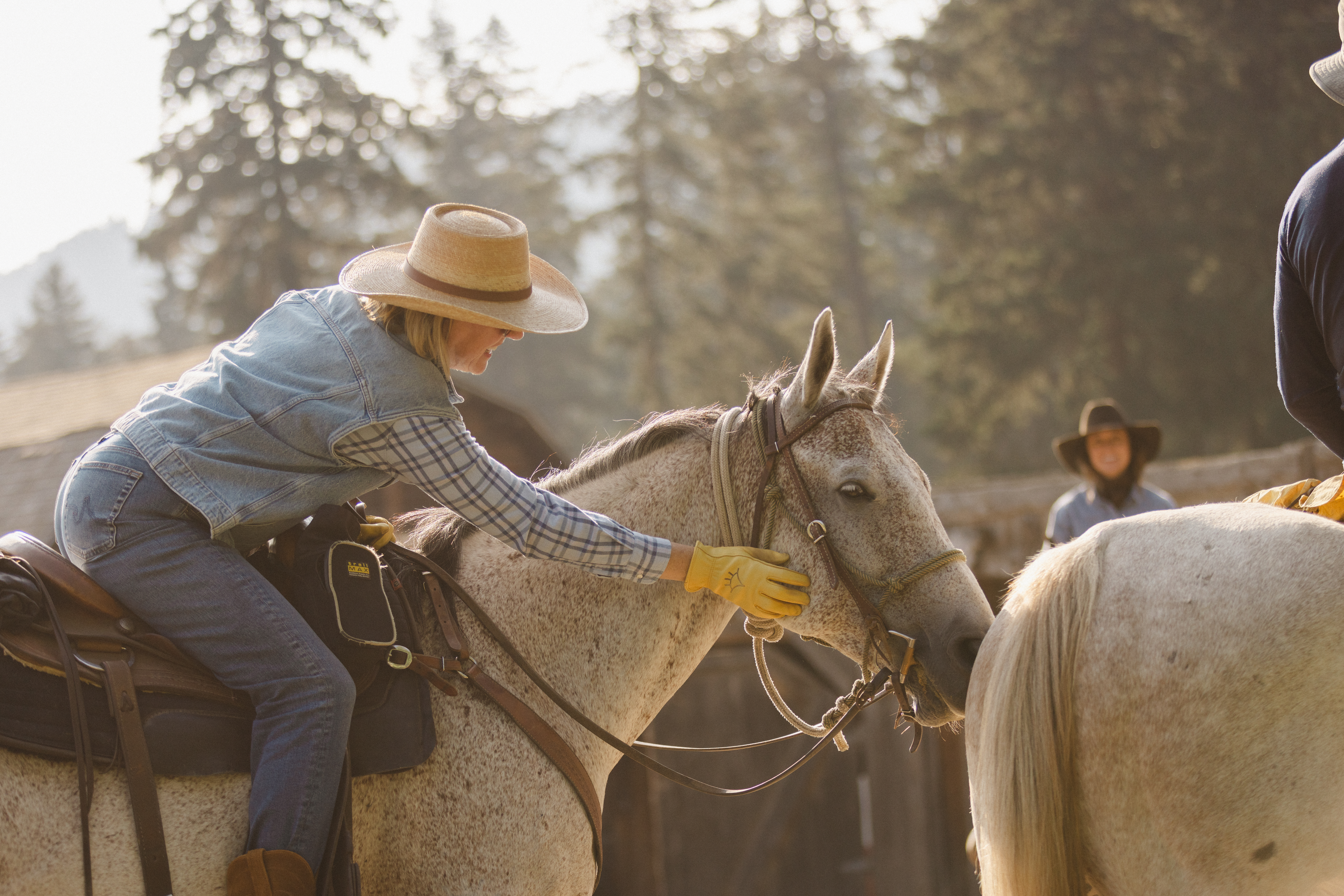 Getting to know your horse is the first step to a successful horseback riding experience. Each horse is specially chosen for each rider. On arrival day, head wrangler, Dustin Call, speaks with each guest about their previous riding experience. This one-on-one conversation is a great chance to voice any concerns and ask questions.
Our curated horse herd is an important asset for guests learning to ride at Mountain Sky Guest Ranch. Each beginner’s horse is hand-picked to be calm and slow. In the winter months, the majority of the wrangling operation is devoted to riding and training horses. When we welcome a new horse, they spend several seasons under the care of a wrangler until we’re sure they are ready to care for our guest riders.
On the morning of your first ride, you’ll mosey to the barnyard and wait for your wrangler to arrive with your horse. As you wait with other riders, there’s a jovial feeling amongst the guests. At the mounting block, you’ll stay on the ground for the first five minutes, learning the tack and particular personality of your horse.
Soon, you’ll mount the horse and get the first feeling of height in the saddle, before moving to the arena for your orientation. The arena is a flat, enclosed space that allows riders to feel safer while they learn the motions. Your wrangler will teach you how to steer, stop, move forward and turn. In addition, they’ll teach beginner horse riding tips, like how to stop your horse from eating grass or when to let them take a drink at the creek — preparation for real scenarios on the trail.
An arena lesson is as short or long as is needed for a beginning horseback rider to be comfortable on their first ride. The wrangler will wait till you are ready before heading out on a slow ride through gentle terrain. If the rider prefers they can stay in the arena their first day.
If a guest would like to do another arena lesson before trail riding, this is part of the regular afternoon schedule most days. This is a great option to build confidence and learn to ride at different speeds.
Trail rides are broken down into three categories: walk rides, walk-trot rides, and walk-trot-lope rides. Beginning riders progress during their time at the ranch, ensuring they have control before moving to a faster speed.
Mind Over Matter: Overcoming Riding Anxiety
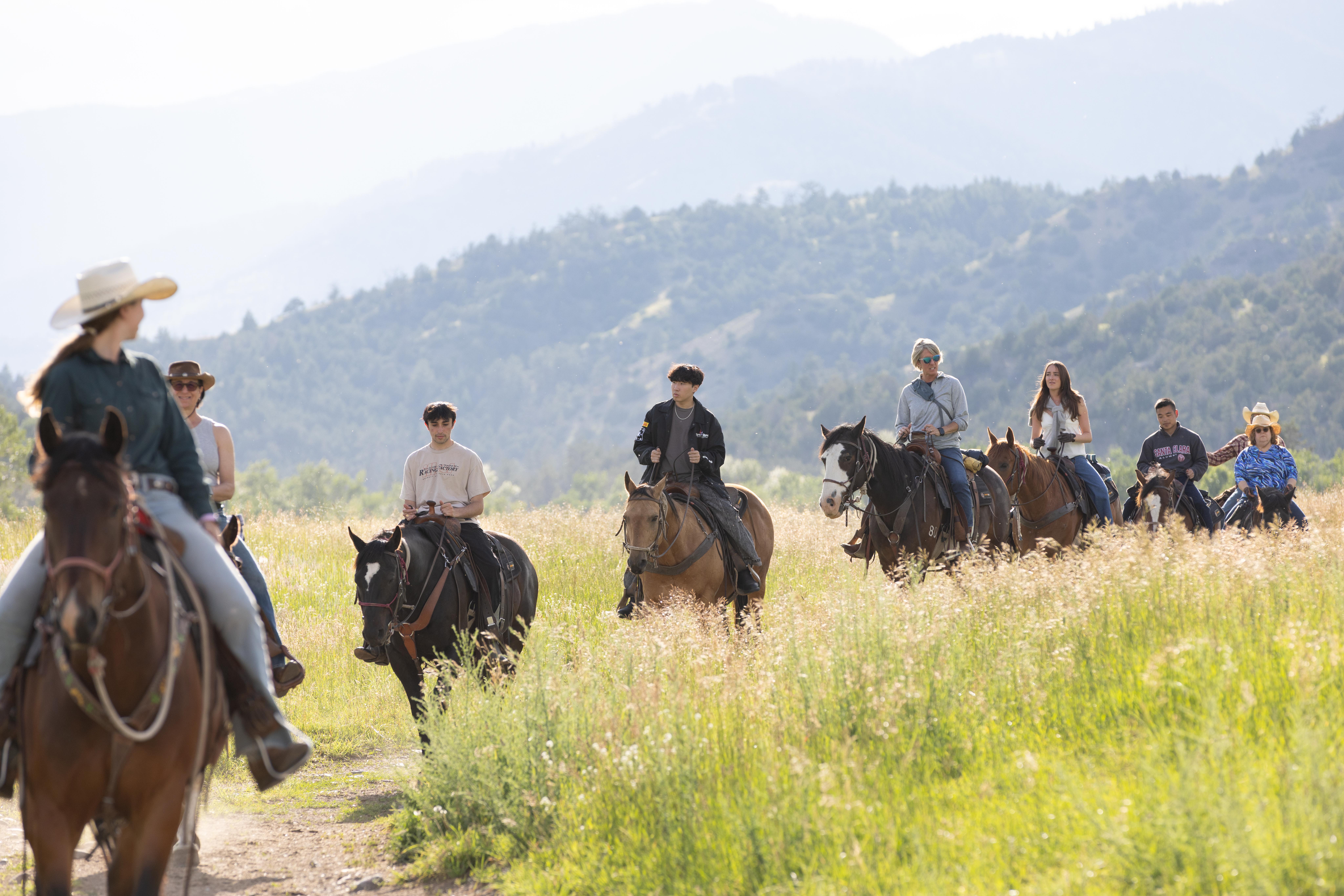 After meeting your horse and learning that they were specially chosen for your week at the ranch, it’s time to take some deep breaths. Your horse is trained to take care of you. Deep exhales tell your horse that you are calm.
“We have spent quite a few years hand-picking this very special herd of horses and they are all worth their weight in gold. We trust them wholeheartedly.” ~ Assistant Head Wrangler Mary Kate O’Connor
Your patient wrangler is also on hand to go at your pace. Once you get on the trail, remember that your horse knows this trail like the back of their hoof. Keep your heels down and chin up. Instead of staring at the reins, keep your eyes on the beautiful, mountainscape around you.
Once you’ve spent some time with your horse and gone through your first arena lesson, your reward is close at hand — viewing the wild landscapes of Yellowstone Country the way cowboys in Montana have been for 150 years.
Kids in the Saddle: Seven-Year-Old Lessons
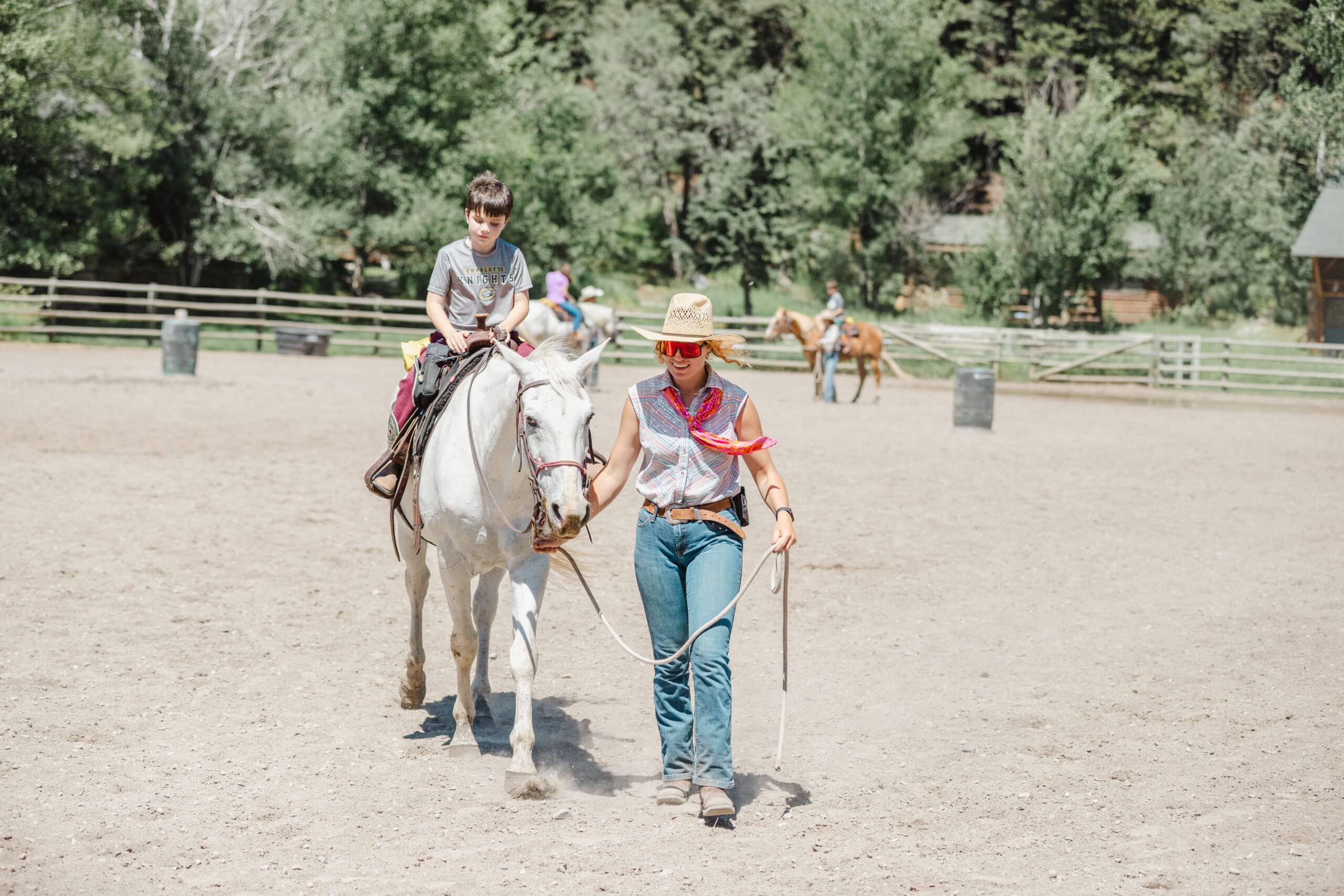
Younger guests can start trail riding at seven years old. Our wrangling team offers specialized lessons to six-year-olds.
In the arena, they learn about horses and the essential gear, like the names and use for the tack and the color of their horse. After that, they play games to learn control of their horse. Red light, Green light is a favorite for learning to start and stop. Next, they’ll learn to maneuver around barrels.
At the end of the week, they ride over to the lodge lawn for a quick graduation ceremony, where their parents and friends can celebrate their success.
Rules of the Road: Essential Trail Etiquette
 There are essential rules of the road that all guests learn to remain safe on the trail. We use the “one horse length” rule to position riders. Just like avoiding tailgating when you drive, keeping a safe distance is the best way to avoid getting too close to the horse ahead of you.
Wranglers are like traffic controllers on the trail, and they will instruct you on the best routes to take. Always listen to their advice, and you’ll be in good hands.
Just as communicating a sense of calm with your horse is important, avoiding loud noises is a great way to continue this approach on the trail.
As you start to take on different terrain, you can use what you learned in the arena to go off-trail. Each guest learns to steer independently, so you’re not relying on following the horse in front of you. Our wranglers allow riders to spread out and maneuver around trees or sagebrush. As you develop your riding skills, this ability to steer will allow you to try faster speeds, team penning, and the working ranch experience if you’re interested.
Learning to ride a horse at a storied dude ranch in Montana is an incredible experience. Step into the corrals as a greenhorn, and with the help and encouragement of our team, you could be sorting cows by the end of the week. From a Tuesday morning slow ride to the working ranch experience, all you need is a pair of boots and an open mind. It’s the culmination of learning to partner with another species and communicate effectively. This lesson extends far beyond the corrals or the trails, into a life lesson that you will carry with you your whole life.
“A horse gives people an extra set of legs to do things they wouldn’t be able to do on their own. There’s a special feeling of being able to accomplish something with a horse, like getting to the top of a mountain or finding a missing pair. To be in tune with another being and achieve something together is a memory like no other.” ~ Assistant Head Wrangler Mary Kate O’Connor
If you’re interested in learning more about our horseback riding activities or our numerous packages, then please contact us today.
FAQs
Q: Do I need to be physically fit to ride a horse?
A: You don’t need to be an athlete, but core strength helps. Riding is a physical activity that uses leg and stomach muscles. If you have severe back or hip issues, consult with the ranch staff beforehand, but for most general beginners, the horses do the heavy lifting.
Q: What if I get scared and want to get off in the middle of a ride?
A: Wranglers are trained to handle anxiety. If you panic, tell your guide immediately. They can stop the group, help you calm down, or in extreme cases, radio for a vehicle to pick you up at the nearest trail intersection. You are never “trapped” on the horse.
Q: What should I wear for my first time riding?
A: Function over fashion. Wear long jeans (to prevent chafing), smooth-soled boots with a heel (for safety in the stirrup), and layers that don’t flap in the wind. Avoid scarves or loose jewelry that could get tangled.

